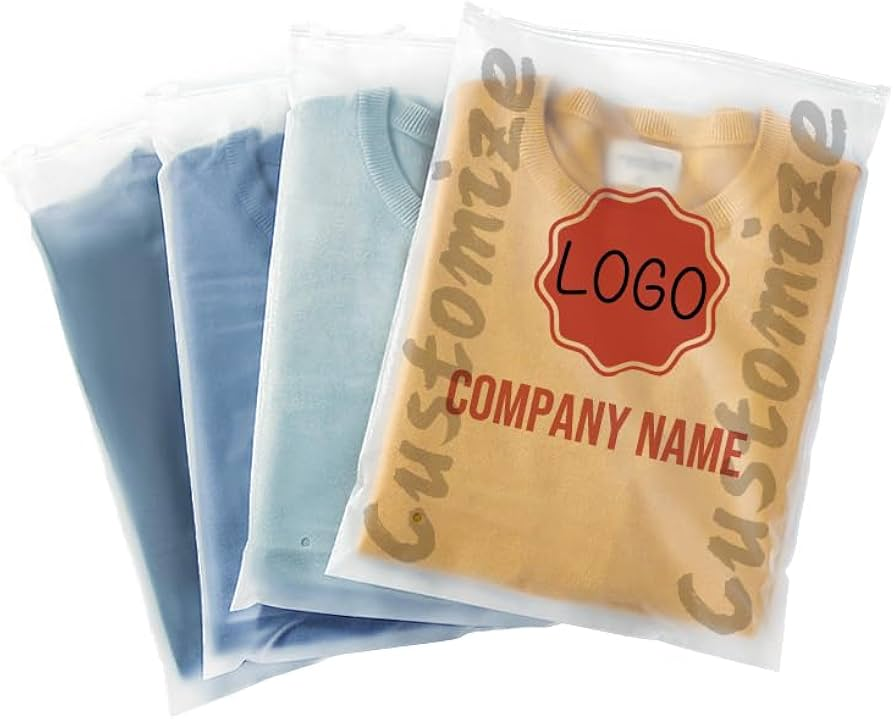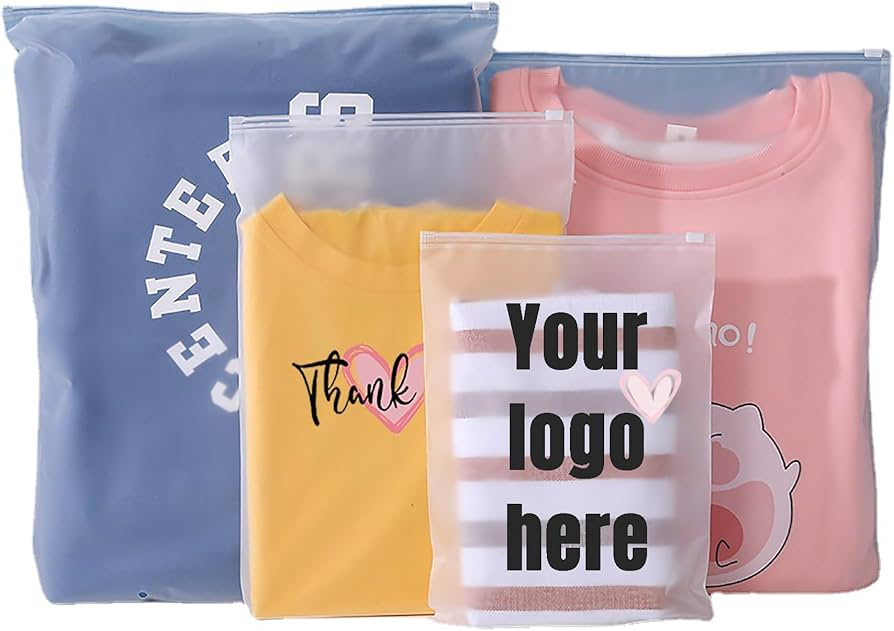
A “bag for clothes” is not a single, legally-defined package format; it is a family of flexible packaging constructions whose common denominator is the ability to enclose garments while adapting to their soft, compressible geometry. Depending on where the package is used—on a retail shelf, in an e-commerce parcel, on a hanger in transit, or in a consumer’s suitcase—the same physical object can be classified in at least four different professional vocabularies:
- Transport Package vs. Consumer Package (ISTA & ISO 21067)
- Flexible vs. Semi-rigid vs. Rigid (ASTM D996)
- Primary, Secondary, or Tertiary (EU Packaging & Packaging Waste Directive)
- Sales Unit vs. Handling Unit (GS1 Global Trade Item Number rules)
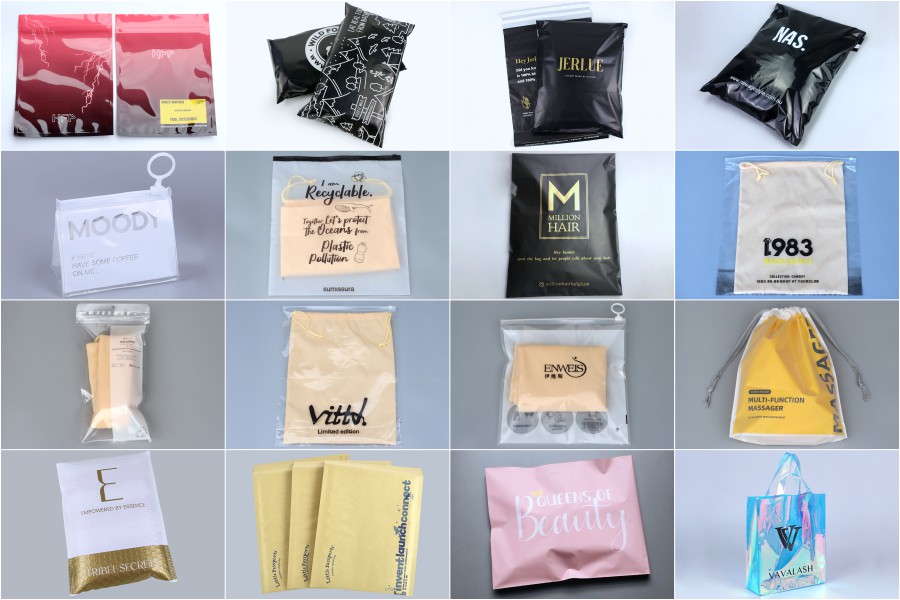
This article explains how the identical “bag” migrates across those categories, what technical standards govern each migration, and how brand owners, fulfilment centres and recyclers should consequently specify, test, and code the bag.
1. Physical Construction: Why a Bag Is Flexible Packaging First
ASTM D996-23 defines flexible packaging as “a package or container whose shape can be readily changed.” A clothes bag—whether made of LDPE, HDPE, PP non-woven, rPET film, bi-oriented PA/PE or paper/PLA laminates—meets that criterion because its thickness is < 250 µm and its bending stiffness is < 25 mN (measured by ISO 2493). Therefore, in the material science layer, the bag is unconditionally “flexible packaging.”
2. Retail Shelf Presence: When the Bag Becomes the Sales Unit
If the bag is printed, decorated with a hang-hole, and sold to the consumer still containing the garment, it is simultaneously:
• a primary package (the first containment touching the product),
• a sales unit (the smallest unit scanned at point-of-sale), and
• a consumer package (designed for end-user handling).
Under GS1 rules, the bag must carry an EAN/UPC symbol, the ℮-mark if the content is declared by nominal weight, and—under the EU SUP Directive 2019/904—a plastic identification code (07 for OXO-degradable, 04 for LDPE, etc.) plus the obligatory “Plastic in Packaging” turtle logo if thickness < 45 µm.
3. Logistics Layer: When the Same Bag Becomes a Secondary or Tertiary Package
Brand owners often overwrap 6–12 pre-packed garments into a master poly-mailer or carton. In that stack, the printed retail bag is no longer the handling unit; it is demoted to secondary packaging. Drop-testing under ISTA-6 Amazon SIOC or FedEx-Pack-101 then requires the bag to survive 10 drops from 760 mm without seal rupture, even though the bag was originally designed only for shelf appeal, not for parcel abuse. Consequently, the specification must evolve:
• Film thickness ↑ from 40 µm to 60–80 µm,
• Seal width ↑ from 5 mm to 10 mm,
• Coefficient of friction ↑ to ≥ 0.35 to prevent pallet slip,
• Optional 2 mil PE bubble lamination or 80 gsm spun-bond out-layer.
4. Garment-on-Hanger (GOH) Systems: Bag as a Protective Accessory, Not a Package
In high-value apparel logistics, garments travel on wheeled GOH trolleys inside a 0.08 mm LDPE “dry-cleaning style” hood. Because the film never leaves the distribution centre, it is classified as a handling accessory, not a package under EU PPWD. Nevertheless, it must still comply with ISO 22341:2021 for puncture resistance (> 5 N) and anti-static surface resistivity (< 10¹¹ Ω) to avoid dust attraction that would downgrade the garment to “B-stock.”
5. Sustainability and End-of-Life Coding
Because the same physical object can be primary, secondary or accessory, recyclers need a decision tree printed on the film:
IF (thickness > 45 µm AND mono-material LDPE) → store drop-off stream #2
IF (multi-layer PA/PE OR metallised) → energy recovery, not mechanical recycling
IF (paper/PLA with > 85 % fibre) → fibre stream, pre-wash required
The How2Recycle label in North America and the OPRL label in the UK both recognise the bag as “flexible plastic” but require the brand to state the actual use-phase (consumer vs. non-consumer) to determine whether the “Recycle” or “Return to Store” icon is appropriate.
6. Regulatory Checklist for Spec Writers
Use the following matrix to avoid double classification conflicts:
| Variable | Retail Shelf | E-commerce Parcel | GOH Transit Hood |
|---|---|---|---|
| Package level | Primary (sales) | Secondary | Accessory |
| ISTA test protocol | Not required | ISTA-6 SIOC | ISO 22341 |
| Barcode liability | GTIN-13 on bag | SSCC-18 on shipper | none |
| Plastic tax (UK £200/t) | Due if < 30 % rPET | Due if < 30 % rPET | Exempt |
| Labelling obligation | SUP turtle + ℮-mark | none | none |
| Disposal instruction | OPRL “Store” | OPRL “Store” | Internal reclaim |
7. Future-Proofing: From Bag to Mailer to Returnable
The fastest-growing SKU in fashion fulfilment is the “dual-use mailer” that leaves the factory as a secondary shipper, converts into a consumer closet storage bag, and finally reverses into a pre-paid returns pouch. Because the same film must survive three duty cycles, specification engineers are moving from single-layer LDPE to 70 µm PE/PA/PE co-extrusion with 180° peelable seal tape. Under EU law, the object is still a flexible package, but its environmental footprint is now amortised over three life-cycles, shifting the critical question from “what kind of package type is a bag for clothes?” to “how many functional lives can we design into one flexible package?”
Conclusion
A bag for clothes is, at the material level, always flexible packaging. Everything else—primary, secondary, consumer, transport, accessory—is a use-case attribute, not an intrinsic property. Professionals must therefore stop asking for a universal label and instead specify the bag as:
“Flexible packaging, LDPE 60 µm, mono-material, printable, ISTA-6 compliant when used as secondary shipper, OPRL ‘Store’ recyclable, SUP-turtle compliant, designed for three duty cycles.”
That single sentence captures the package type, the legal obligations, and the sustainability profile—allowing the same bag to travel legally and efficiently from factory floor to customer closet and, increasingly, back again.